- KYX
- Posts
- The Distill - The SaaSpocalypse
The Distill - The SaaSpocalypse
Per-seat pricing dies, OpenClaw lives, & there's a new dad on deck
Greeting Pioneers,
Jack just shipped his most important product yet: a future founder (due date? nailed it).
Life is full of hard decisions and making tough choices. We thought Jack was down for the cause, but looks like he’s lifestyling.
Jk 🙂 but he’ll be AWOL for a few weeks while adjusting to his new role as Louisville’s favorite new dad.

The SaaSpocalypse
SaaS isn’t dead but this wave of the AI revolution is coming for per seat pricing. Anthropic's Claude plugins wiped $285 billion off B2B SaaS valuations in a week.
If one person + AI can do the work of 5 people (the work that previously required 5 software licenses), why would companies keep paying for those 5 seats?
We won’t.
But per-seat pricing was always problematic for enterprise software - this recent movement is just forcing companies to finally consider new pricing models that better meet their users needs.
The Problem Was Always There
The most powerful growth engine you can build is word-of-mouth. Product developers activate it through social features like embedded sharing, @mentions, collaborative workspaces - anything that makes one user want to pull another user into your product.
The last thing you'd want to do is discourage that behavior by throwing up a paywall or breaking the product flow at the exact moment someone's ready to invite a teammate.
But B2B per-seat pricing did exactly that for years, both missing opportunities and breeding resentment in their customers. They created silos in businesses, forcing companies to patch those with more software.
Look at Jira, it was the gold standard for product & engineering management for years, but once during a cost-cutting initiative, my team built a dashboard running on top of a zapier integration into a single Jira account to show our customer support team which bugs our engineerings knew about. It wiped the need to pay for 3000 extra software licenses, and the frustration that that was ever necessary is why I never picked Jira again when selecting software for future companies.
Imagine if we wouldn’t have had to do that. There’d be thousands more employees exposed to Jira in that one company alone. Those people advocate for and directly choose software in thousands of other companies today.
Many enterprise software companies have been encouraging us (through paywalls) not to use the very features that would lock us into their product. This behavior will continue to make us creative in a time when implementing that creativity is easier than it’s ever been. Zapier. N8N. Claude Cowork. Billions in value replaced by the tools that served us better.
This present AI moment has just made this gap obvious. Companies will always optimize away costs that scale with headcount. When seats = cost, seats will be eliminated.
What to Do Instead
If you're a SaaS founder watching this unfold, stop counting seats. Start charging for things AI can't eliminate.
Usage-Based Pricing
Charge for actions, not access. Stripe doesn't care how many employees you have - they charge per transaction. Twilio charges per message sent. The more value customers extract, the more you make.
Why it works: AI makes people more productive, which means more usage, which means more revenue for you. You're aligned with efficiency gains instead of penalized by them.
Value-Based Pricing
Charge for outcomes, not inputs. If your software closes deals, take a percentage of deal value. If it saves money, charge based on savings generated.
Why it works: Doesn't matter if a human or an AI created the outcome. You get paid when your customer wins.
Examples: Revenue-share models, commission-based pricing, performance bonuses tied to results.
Feature-Tiered Pricing
Give away unlimited seats. Charge for capabilities. Slack is seat-based, but their free tier lets entire teams collaborate - you pay when you need advanced features, not when you add people. They also have mechanisms to offload per-seat costs in the paid plans through channel guests.
Why it works: Collaboration spreads your product. Network effects lock people in. When teams are hooked, they pay to unlock features that make them faster.
Consumption Pricing
Charge for resources consumed: storage, compute, bandwidth. AWS doesn't care how many engineers you employ - they charge for what you use.
Why it works: AI is compute-intensive. The more AI agents your customers run, the more resources they consume, the more you make.
Examples: AWS (compute/storage), Snowflake (data processed), OpenAI (tokens).
Pick Your Model Before AI Picks For You
The SaaS companies getting crushed are the ones with pricing models built for a world where adding people was the only way to scale output.
That world is over.
If your revenue depends on customers hiring more people to use your software, you're betting against every AI agent, copilot, and automation tool trying to help them do more with less.
Switch to a model where productivity gains increase your revenue instead of tanking it. Charge for usage, outcomes, features, consumption, or platform value – anything except the number of humans logging in.
Don't let your business model collapse when your customers get more efficient. They will get more efficient. Bet on it. Plan for it.
Vibe Code Night: Come build….yourself?
Review your user analytics and suggest feature improvements? Write engineering tickets? Summarize your life across Slack/email/Notion/Fathom and build you a digital daily diary? Say hello to Claude bot.
The hype is all over the internet for good reason, OpenClaw really is taking over. Come find out more about it at our next VCN.
Nate from Duegooder is teaching you how to set it up and install your first skill at our next Vibe Code Night, March 4th 5-8pm. Hope to see many of you there again!!
Not into OpenClaw, just wanna move some of your projects forward in the company of others? You’re still invited.

Job Alert: EQL is looking for a Site Reliability Engineer
EQL Games, is a local company looking for an SRE. you can find the JD in our slack channel here: https://kycombinator.slack.com/files/U04PRQ716D7/F0AELGAFE3V/site_reliability_engineer_-_role_description.pdf
5+ years in SRE, DevOps, or infrastructure engineering
Strong experience with Kubernetes, Docker, and cloud platforms (GCP preferred)
Join our slack channel to find out more.

Louisville Partners
A message from LouCity
A new pro soccer season kicks off next month at Lynn Family Stadium as Louisville City and Racing Louisville return to action.
LouCity hosts Miami FC at 4 p.m. Saturday, March 14, and expectations are once again high for a club that has claimed back-to-back regular season titles. Attendance regularly tops 10,000 in support of the boys in purple with the home opener offering happy hour, live music and a gate giveaway. Visit LouCity.com/opener for more information.
LouCity plays in the USL Championship, America’s second division, but applied to join USL Premier starting play in 2028. USL Premier will top a pyramid of leagues that will feature promotion and relegation, the world-standard system that sees clubs move up and down the ladder based on performance.
It’s a star-powered first look at Racing Louisville, which is led by U.S. national teamer Emma Sears. They’ll go up against Trinity Rodman and the Washington Spirit at 8 p.m. Friday, March 20. Fans are encouraged to arrive early for pregame happy hour and stick around after the final whistle for a fireworks show. Visit RacingLouFC.com/opener for more information.
Since starting play in 2021, Racing has blazed a trail as its city’s only major-league professional sports team. Named as an ode to Louisville’s Churchill Downs and the Kentucky Derby, Racing competes in the National Women’s Soccer League, the world’s premier women’s professional soccer league.
When fans purchase LouCity and Racing tickets, every dollar gets reinvested directly back into the clubs — players, staff and facilities — building teams that strive to make our community proud.
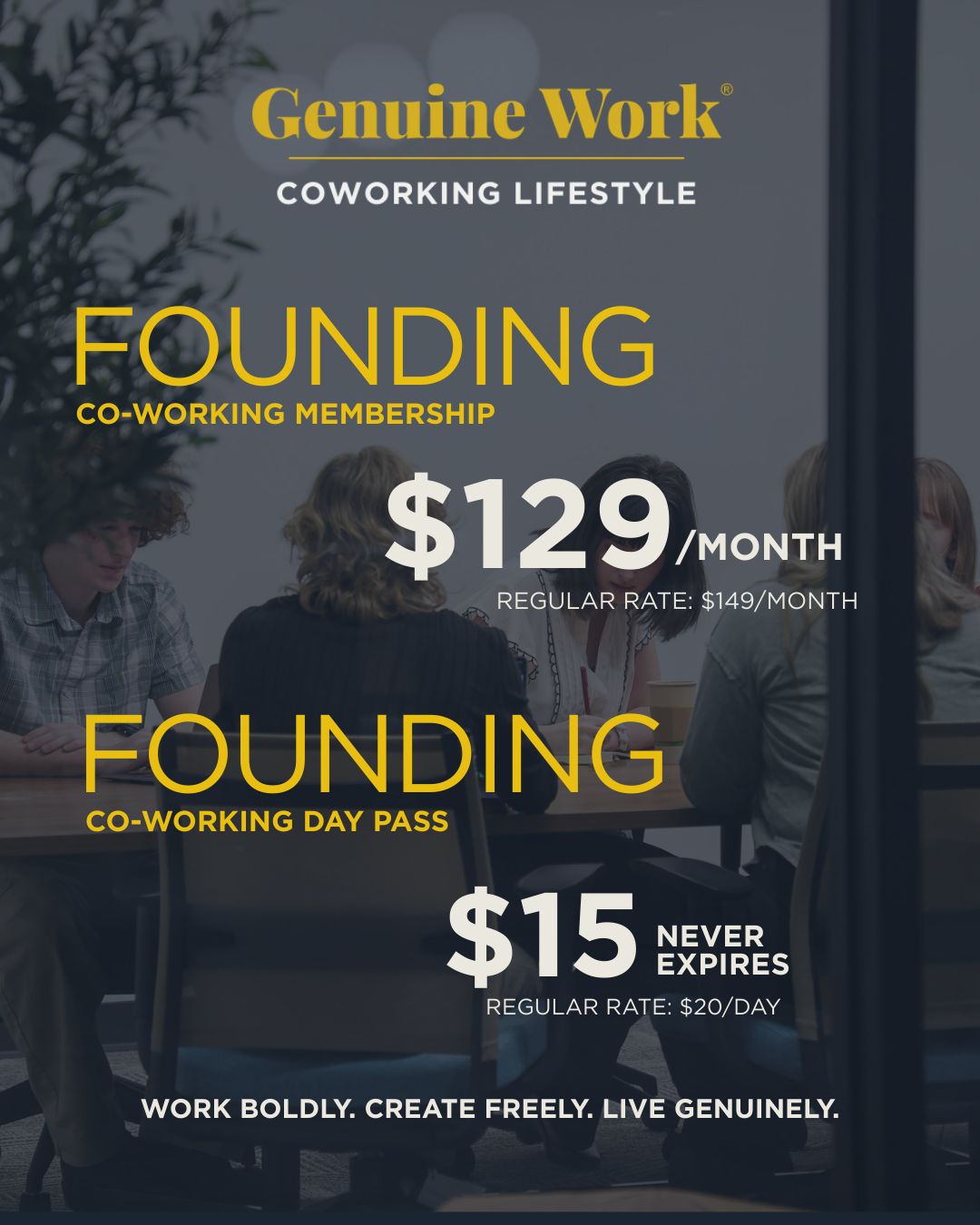
A message from Genuine Works
Genuine Work is a new coworking space opening soon in NuLu, created for people who care about how they spend their time—and who they spend it with. It’s a place to focus, connect, and build alongside others who take their work seriously without taking themselves too seriously. Thoughtfully designed, rooted in community, and connected to the creative energy of Mashup Food Hall, Genuine Work is where work feels more human.
Founding membership and day pass rates are available for a limited time and end February 28, 2026.
To schedule a tour or learn more, contact Nadia at [email protected].
Note’s on The Distill’s co-EICs: Jack Crowdis & Rachel Edenfield
Jack runs the newsletter, helps run KYX. He’s a career startup kid, past founder, and current operator. Weekly contributor. Always editor.
Rachel’s the Founder/CEO of venture-backed Swell, and a driver of KYX. Routinely delivers the city’s sharpest long-form startup advice. Always re-edits Jack’s edits (including this bio).
Know someone who should read this? Forward it, or send them this link.
That’s a wrap 🎬
Keep showing up 👊
Keep shipping 🚢
Peace, Pioneers ✌️